How I Almost Lost My Family’s Inheritance — And What I Learned About Managing Cultural Wealth
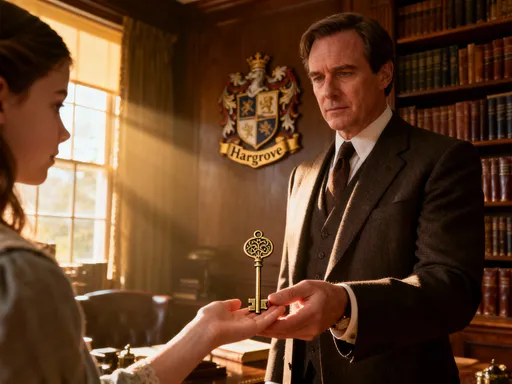
Inheriting my family’s estate felt like winning the lottery—until I realized how easily it could vanish. What looked like financial security quickly turned into a maze of emotional decisions, outdated traditions, and costly mistakes. I didn’t understand the real weight of cultural inheritance until I mismanaged the funds and saw the consequences unfold. This is my story of what went wrong, the hidden pitfalls no one talks about, and how proper fund management could have changed everything. It’s not just about money; it’s about preserving identity, honoring memory, and ensuring that future generations benefit—not suffer—from the wealth we are entrusted to protect.
The Emotional Weight Behind the Money
Inheriting wealth is rarely a purely financial event. For many families, especially those with deep cultural roots, an inheritance carries the weight of history, memory, and identity. When I received my share of the family estate, I didn’t see it as a portfolio of assets—I saw it as a sacred trust. Every dollar, every piece of land, every heirloom was tied to stories I had grown up with: my grandfather’s early struggles, my grandmother’s quiet sacrifices, the festivals we celebrated on ancestral property. This emotional connection made it nearly impossible to view the inheritance through a rational financial lens. I treated the money not as capital to be managed, but as a relic to be preserved—untouched, unaltered, unchanged. That mindset, while well-intentioned, became the first step toward financial erosion.
The challenge with cultural inheritance is that it often comes with unspoken rules. In my family, there was an expectation that a portion of the funds would support annual religious ceremonies, that the ancestral home must remain in the family regardless of cost, and that certain relatives—regardless of their financial literacy—should be involved in decisions. These traditions were deeply respected, but they also created blind spots. I hesitated to question whether funding a large gathering every year was sustainable, or whether keeping a half-empty property in a declining town made economic sense. The fear of dishonoring tradition outweighed the need for sound financial planning. Over time, this emotional loyalty began to drain resources. Funds meant to last generations were being spent on short-term gestures, with little regard for long-term impact.
What I eventually realized is that sentimentality, while natural, can be a silent risk in wealth management. When emotions dominate decision-making, logic is pushed aside. Investments are held too long because of sentimental value, even when they underperform. Opportunities for growth are missed because change feels like betrayal. And worst of all, the burden of managing the inheritance falls on those least equipped to handle it—often the most emotionally attached members of the family. Recognizing this pattern was painful but necessary. I had to learn that honoring a legacy doesn’t mean freezing it in time. True respect for the past means ensuring it has a future.
Why Cultural Inheritance Is Different
Most discussions about estate planning focus on wills, taxes, and asset distribution—but they often overlook the unique nature of cultural inheritance. Unlike a standard financial transfer, cultural inheritance includes elements that cannot be measured solely in monetary terms. It may involve land tied to ancestral memory, heirlooms passed down for generations, or ongoing responsibilities to a community or religious institution. These assets carry deep symbolic meaning, yet they still require financial upkeep. A family temple may inspire reverence, but it also needs roof repairs. An antique collection may tell a story, but it requires insurance, storage, and preservation. These costs are real, even if they are not always accounted for in traditional estate planning.
What makes cultural inheritance particularly complex is that its value is both tangible and intangible. A piece of farmland may generate modest income, but its true worth lies in the fact that five generations have worked it. Selling it might make financial sense, but emotionally and culturally, it could feel like a severance from identity. This duality creates a unique management challenge: how to maintain cultural significance while ensuring financial sustainability. Many families fail to address this tension, assuming that because an asset is meaningful, it must be kept—regardless of cost. But meaning alone does not pay property taxes, legal fees, or maintenance bills. Without a strategy that balances both dimensions, even substantial inheritances can quietly erode.
Another key difference is the expectation of continuity. In many cultures, there is an unspoken belief that inherited wealth should remain intact—unchanged—for future generations. This mindset can discourage diversification, risk management, or even professional oversight. Family members may resist bringing in financial advisors, fearing it undermines tradition or shows a lack of trust. Yet, the world changes. Markets shift. Tax laws evolve. Holding assets in the same way for decades without review is not preservation—it’s neglect. Cultural inheritance requires a specialized approach: one that respects heritage while applying modern financial principles like liquidity planning, risk assessment, and performance tracking. Without this balance, the inheritance becomes a burden rather than a blessing.
The Hidden Pitfalls No One Warns You About
I learned the hard way that good intentions are not enough. When I first took responsibility for managing the family’s inheritance, I believed that as long as I acted with care and respect, everything would be fine. I trusted family elders to guide decisions, assumed that long-standing practices were sound, and avoided making changes that might be seen as disrespectful. These choices seemed safe at the time, but over the years, they led to quiet but serious financial decline. The most dangerous pitfalls were not dramatic losses or fraud—they were the slow, invisible drains that no one talked about. I want to share them now, not to assign blame, but to help others avoid the same mistakes.
One of the biggest mistakes was overvaluing illiquid assets. Our family held a significant portion of its wealth in land and property, much of which had been in the family for generations. Because these assets were not frequently sold, we assumed they retained their value. But when I finally had a professional appraisal done, I discovered that several properties were worth far less than we believed—some were even losing money due to high maintenance and low rental income. Yet, because they were “family land,” no one had questioned their role in the portfolio. We were emotionally attached to the idea of ownership, even when it made no financial sense. This overvaluation created a false sense of security, leading us to spend more than we could afford.
Another hidden risk was the failure to update legal and financial structures. The original estate plan had been created decades ago, long before modern tax regulations or digital banking existed. We continued operating under outdated wills, informal agreements, and handwritten records. This lack of formal governance made it difficult to track spending, assign accountability, or respond to changes in the law. When new tax requirements were introduced, we were caught off guard, resulting in penalties and unnecessary costs. Worse, disputes arose among family members because roles and responsibilities were never clearly defined. Trust was strained, not by greed, but by confusion and lack of clarity.
Perhaps the most painful lesson was the danger of resisting diversification. Tradition dictated that we keep wealth within familiar forms—real estate, gold, cash savings. We avoided stocks, bonds, or other investment vehicles because they were seen as risky or foreign. But this lack of diversification left us vulnerable. When property values dipped, our entire portfolio suffered. We had no buffer, no alternative sources of income. I now understand that diversification is not a betrayal of tradition—it is a form of protection. By spreading risk across different asset classes, families can safeguard their inheritance without abandoning their values.
When Tradition Clashes With Smart Fund Management
One of my most difficult decisions involved a small farmhouse that had belonged to my grandparents. It was not a profitable property—rental income barely covered taxes and repairs—but it was where my father grew up, where family reunions were held, and where countless memories were made. When advisors suggested selling it to reinvest the proceeds, I refused. To me, selling felt like erasing a part of our history. I insisted on keeping it, pouring money into maintenance, even as other parts of the portfolio weakened. Years later, after a major roof collapse and mounting repair bills, I was forced to confront the truth: my loyalty to tradition had come at a high financial cost. The farmhouse was not preserving our legacy—it was draining the resources that could have supported it.
This experience taught me that honoring the past and securing the future are not the same thing. Tradition often emphasizes preservation—keeping things as they were. But sustainable wealth management requires evolution—adapting to changing circumstances. The two can coexist, but only if families are willing to have honest conversations about what truly matters. Is it the physical property, or the memories it represents? Is it the act of holding onto an asset, or the ability to pass on stability and opportunity to the next generation? In my case, I realized that the value of the farmhouse was not in the bricks and wood, but in the family connections it fostered. Those connections could be maintained in other ways—through photographs, stories, or even smaller gatherings in more affordable locations.
The clash between tradition and financial wisdom often shows up in symbolic spending. Many families allocate funds to ceremonies, rituals, or community events not for financial return, but for cultural continuity. There is nothing wrong with this—such practices strengthen identity and belonging. But problems arise when these expenses are not budgeted or reviewed. I once approved a large festival expenditure without assessing our cash flow, assuming it was a “necessary” cost. The result was a temporary cash shortage that delayed critical repairs on another property. From that point on, I insisted on treating even traditional spending as part of a formal budget. We could still honor our customs, but we would do so sustainably—within our means, with clear limits, and with periodic review.
Finding balance does not mean abandoning tradition. It means applying discipline to it. It means asking hard questions: Is this asset still serving its purpose? Can we honor our heritage in a more efficient way? What would our ancestors want us to do if they saw the full financial picture? These questions are uncomfortable, but necessary. True stewardship of cultural wealth requires the courage to evolve—responsibly.
Building a Sustainable Fund Management Strategy
After nearly losing everything, I knew we had to change. I began by separating emotional assets from income-generating ones. We identified which properties and items were primarily symbolic and which were expected to contribute financially. The ancestral home, for example, was reclassified as a cultural asset—its value was in memory, not profit. We set a strict maintenance budget and stopped expecting it to generate income. At the same time, we identified underperforming real estate that had no emotional significance and sold it, reinvesting the proceeds into a diversified portfolio of low-cost index funds, bonds, and rental properties in growing markets.
Next, we established clear usage rules. Instead of making decisions case by case, we created a formal framework for how the inheritance could be used. A certain percentage was allocated to preservation—maintaining heirlooms, funding ceremonies, and upkeep of symbolic properties. Another portion was dedicated to growth—invested with the goal of increasing long-term value. And a third segment was reserved for family support—helping with education, healthcare, or home purchases, but only under defined conditions. This structure removed emotion from day-to-day decisions and ensured that spending aligned with long-term goals.
We also brought in neutral experts. I hired a financial advisor with experience in intergenerational wealth and a legal consultant familiar with estate laws. Their role was not to override family values, but to provide objective guidance. They helped us update our wills, establish trusts, and create a governance council made up of family members and independent advisors. Meetings were held quarterly, with agendas, records, and performance reviews. This brought transparency and accountability to a process that had once been informal and reactive.
One of the most effective changes was introducing liquidity planning. We had always kept large amounts in cash or gold, believing it was safe. But this limited our ability to respond to opportunities or emergencies. We now maintain a balanced liquidity strategy—enough cash for short-term needs, but also access to credit lines and diversified investments that can be adjusted as needed. This flexibility has allowed us to handle unexpected costs without dipping into core assets.
Protecting the Legacy Without Losing the Wealth
Preservation does not mean stagnation. I now see that the best way to honor our heritage is to ensure it remains viable. We reinvest a portion of investment returns into heritage projects—digitizing old family records, restoring key artifacts, and creating a small archive accessible to younger generations. These efforts keep the culture alive while using only a sustainable share of resources. We also use technology to improve transparency: a shared digital ledger tracks all transactions, so every family member can see how funds are used. This reduces suspicion, builds trust, and encourages responsible behavior.
Perhaps the most important step has been educating the next generation early. We began hosting annual family meetings where financial basics are discussed—not just how much we have, but how it is managed, why decisions are made, and what responsibilities come with inheritance. Children as young as twelve are invited to attend, with age-appropriate materials explaining concepts like budgeting, diversification, and long-term planning. This isn’t about turning them into investors—it’s about fostering a sense of stewardship. They learn that wealth is not just for personal benefit, but for collective care.
We’ve also redefined what success looks like. It’s no longer about holding onto every piece of land or artifact. Success is measured by stability, growth, and the ability to support family needs without depleting the principal. We celebrate milestones like paying off debt, increasing investment returns, or funding a relative’s education—not just because they are financially sound, but because they reflect responsible management. This shift in mindset has transformed how we view the inheritance: not as a static treasure, but as a dynamic trust that requires care, wisdom, and courage.
Lessons That Could Save Your Family’s Future
Looking back, I wish I had known sooner that managing inherited wealth isn’t just about holding on—it’s about evolving responsibly. Cultural inheritance is a gift, but it comes with duties. It demands more than good intentions; it requires structure, discipline, and the humility to seek help. The greatest risk is not losing money—it’s losing clarity. When emotion, tradition, and financial reality are not aligned, even the largest inheritances can fade.
The lessons I’ve learned are simple but powerful. First, separate sentiment from strategy. Honor your heritage, but manage your assets with clear eyes. Second, update your approach regularly. Laws change, markets shift, and families grow—your financial plan should too. Third, involve experts. Neutrality brings objectivity, and objectivity prevents costly mistakes. Fourth, educate early. The next generation should understand the weight of stewardship before they inherit it. And finally, redefine legacy. It is not about preserving the past exactly as it was, but about ensuring that its values—care, responsibility, continuity—live on in a changing world.
Your family’s inheritance can be a source of strength, identity, and opportunity. But only if it is managed with both heart and wisdom. Don’t wait for a crisis to act. Start the conversation now. Review your assets. Bring in guidance. Create a plan that respects your culture while securing your future. Because the true measure of a legacy is not how much you keep, but how well you pass it on.