What I Learned About Market Forecasting During My Career Break
Taking a career gap felt like stepping off a cliff—no income, no routine, just uncertainty. But it also gave me time to rethink money. I started watching markets, not to gamble, but to understand trends. What I discovered changed how I see investing. It’s not about predicting the future perfectly, it’s about preparing for it. Here’s how I learned to forecast markets the beginner way—no finance degree required.
The Moment Everything Changed: Facing Financial Uncertainty
Leaving a stable job was never part of the original plan. For years, my life followed a predictable rhythm: work, earn, save, repeat. When I decided to take a career break—motivated by personal growth, family needs, and a desire to reset—my financial confidence wavered. The first few weeks were liberating. I slept in, caught up on books, and rediscovered hobbies I had long neglected. But that sense of freedom began to fade as the reality of no incoming salary settled in. The bank balance, once a reassuring number, started to feel fragile. Every grocery receipt, streaming subscription, and utility bill carried a new weight. I wasn’t just spending money—I was depleting a finite reserve.
It was during this period of stillness that I began to confront my relationship with money. I realized I had always treated savings as a passive safety net, something to be drawn from only in emergencies. Now, with no income on the horizon, I needed my money to do more than just sit idle. I wanted it to grow, or at the very least, to avoid losing value to inflation. That shift in mindset—from passive saver to active steward—was the turning point. I knew I couldn’t rely solely on luck or hope. I needed a strategy. And that’s when I turned to market forecasting, not as a speculative tool, but as a way to make informed, rational decisions in uncertain times.
What surprised me most was how emotional this process felt. Fear, doubt, and even guilt surfaced as I questioned past financial choices. Why hadn’t I started investing earlier? Why did I keep everything in low-interest accounts? These weren’t just logistical concerns—they were deeply personal. But rather than spiral, I used those emotions as motivation. I committed to learning, not to become a trader or a financial expert, but to gain enough understanding to protect what I had and position it wisely. The career break, initially seen as a financial setback, became an unexpected opportunity to build a skill that would outlast the gap itself.
Why Market Forecasting Isn’t Just for Wall Street Insiders
For most of my life, I associated market forecasting with high-powered analysts in Manhattan offices, poring over complex charts and running advanced algorithms. I imagined it required advanced mathematics, insider knowledge, and years of training. That perception kept me at a distance, convinced it was a world I didn’t belong in. But during my career break, I began to question that assumption. If forecasting were truly reserved for experts, how could everyday people ever make sound financial decisions? The truth is, effective forecasting doesn’t demand perfection or precision—it demands awareness, consistency, and a willingness to learn.
At its core, market forecasting is about making educated predictions based on available data. It’s not about knowing exactly when the stock market will rise or fall, but about understanding the conditions that make certain outcomes more likely. Think of it like checking the weather before planning a picnic. You don’t need a meteorology degree to see dark clouds gathering and decide to bring an umbrella. Similarly, in finance, you can observe economic signals—such as employment reports, inflation rates, or consumer confidence—and adjust your financial behavior accordingly. These indicators don’t offer guarantees, but they do offer guidance.
What I discovered is that many of the tools and insights used by professionals are accessible to the public. Government agencies publish economic data freely. Financial news outlets provide analysis without charge. Even major investment banks release research reports that summarize market trends in plain language. The barrier to entry isn’t knowledge—it’s confidence. Once I reframed forecasting as a practical life skill rather than a technical specialty, I stopped feeling intimidated. I realized that the goal wasn’t to beat the market, but to avoid costly mistakes and make decisions aligned with my financial reality. For someone on a fixed budget with limited income, that kind of foresight wasn’t just helpful—it was essential.
Building a Simple Forecasting Framework from Scratch
I didn’t have the time or resources to enroll in a finance course, so I built my own simplified framework using free, reliable sources. My approach focused on three foundational pillars: economic trends, market behavior, and consumer sentiment. I began by identifying key indicators that historically correlated with market movements. The unemployment rate, for example, often signals economic health. When job growth slows, consumer spending tends to decline, which can precede a market correction. Similarly, inflation data—released monthly by government agencies—helps determine whether purchasing power is eroding. I didn’t need to interpret every number perfectly; I just needed to spot directional shifts.
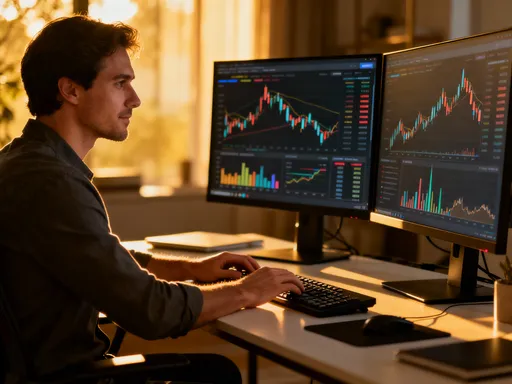
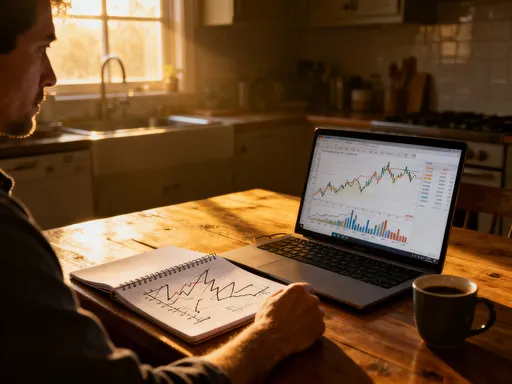
To organize my observations, I created a personal dashboard using a simple spreadsheet. Each week, I logged updates on core metrics: the consumer price index, initial jobless claims, bond yields, and stock market volatility. I also monitored broader trends, such as housing market activity and retail sales. Over time, patterns began to emerge. I noticed that periods of rising inflation were often followed by tighter monetary policy, which in turn affected stock valuations. I also saw that consumer sentiment surveys—measuring how optimistic people feel about the economy—tended to shift before major market turns. These weren’t revelations only accessible to experts; they were observable trends anyone could track with consistency.
One of the most valuable lessons was learning to distinguish between leading and lagging indicators. Leading indicators, like building permits or stock market performance, tend to change before the economy as a whole does. Lagging indicators, such as unemployment rates, confirm trends after they’ve already begun. By focusing on leading signals, I could anticipate shifts rather than merely react to them. For instance, when I saw a sustained drop in new housing permits, I took it as a warning sign of slowing economic activity and adjusted my investment approach accordingly. I didn’t act impulsively, but I did prepare—shifting a portion of my portfolio to more stable assets and holding more cash than usual.
The beauty of this system was its simplicity. I didn’t need proprietary software or paid subscriptions. Most of the data came from official government websites and respected financial institutions. I set up email alerts for key report releases and dedicated one morning each week to review updates. This routine kept me informed without overwhelming me. More importantly, it gave me a sense of control. Instead of feeling at the mercy of market swings, I felt equipped to respond thoughtfully. The framework wasn’t perfect, but it was practical, sustainable, and tailored to my needs as a non-expert navigating a period of financial vulnerability.
Turning Forecasts into Action: Protecting and Growing My Savings
Knowledge without action has limited value. Once I started recognizing patterns, the next challenge was applying them wisely. I didn’t try to time the market perfectly—that would have been unrealistic and risky. Instead, I used my forecasts to guide gradual, disciplined decisions. For example, when inflation data showed a sustained increase, I shifted a portion of my savings into assets that historically hold value during inflationary periods, such as Treasury Inflation-Protected Securities (TIPS) and dividend-paying stocks. These weren’t aggressive bets, but strategic moves designed to preserve purchasing power.
I also became more intentional about spending. When leading indicators suggested a potential economic slowdown, I delayed large purchases and focused on reducing discretionary expenses. This wasn’t about living frugally for the sake of it, but about aligning my lifestyle with the broader economic context. If the signals pointed to uncertainty, I chose to conserve rather than consume. At the same time, I explored low-risk ways to generate modest returns. I opened a high-yield savings account, which offered significantly better interest than my old bank, and began dollar-cost averaging into a low-cost index fund. By investing small, regular amounts, I reduced the risk of entering the market at a peak while still benefiting from long-term growth.
One of the most impactful decisions was adjusting my cash allocation. Traditionally, I kept only a small emergency fund and left the rest in low-yield accounts. But after studying market cycles, I realized the importance of liquidity during downturns. I increased my cash reserve to cover eight months of essential expenses—more than the standard three to six months—because I wasn’t earning income. This gave me peace of mind and prevented me from selling investments at a loss if I needed funds unexpectedly. It also allowed me to stay patient. When markets dipped, I didn’t panic. I viewed downturns as potential opportunities, not disasters. On several occasions, I used my cash reserve to buy undervalued assets during market corrections, which later recovered and contributed to my overall gains.
Looking back, the real benefit wasn’t in hitting home runs, but in avoiding strikeouts. I didn’t make huge profits overnight, but I avoided major losses. I didn’t chase hot stocks or jump on trending investments. Instead, I stayed consistent, made incremental adjustments, and trusted the process. That discipline, guided by basic forecasting, allowed my savings to not only survive the career break but grow modestly despite the lack of income. It proved that thoughtful preparation could outperform speculative action, especially during uncertain times.
Common Traps Beginners Fall Into (And How I Avoided Them)
The journey wasn’t without missteps. Early on, I came across a viral social media post claiming a particular cryptocurrency was guaranteed to surge. The comments were full of testimonials and excitement. For a moment, I considered putting a chunk of my savings into it. Another time, I read an article predicting a specific stock would double in value within months. The logic sounded convincing, and the potential return was tempting. In both cases, I was close to acting on emotion rather than evidence. What stopped me was a simple rule I later adopted: wait 48 hours before making any investment decision. That brief pause allowed me to step back, research independently, and assess whether the opportunity aligned with my strategy.
What I learned is that the biggest threats to sound forecasting aren’t complex—they’re psychological. Fear of missing out (FOMO), overconfidence, and impatience can lead even cautious investors astray. Market noise—24-hour news cycles, sensational headlines, and social media hype—amplifies these emotions. I realized I needed filters to stay grounded. One of my most effective tools was source verification. Before accepting any claim, I checked whether reputable financial institutions or government reports supported it. If an investment sounded too good to be true, it usually was. I also avoided following individual influencers, no matter how popular, because their incentives often differed from mine. My goal wasn’t to get rich quickly—it was to protect and steadily grow my savings.
Another trap I avoided was overreacting to short-term volatility. When the market dropped 5% in a single day, my first instinct was concern. But I reminded myself that corrections are normal and often temporary. Instead of selling, I reviewed my long-term goals and risk tolerance. I asked: has the fundamental outlook changed, or is this just noise? In most cases, it was noise. I also resisted the urge to check my portfolio daily. Constant monitoring increased anxiety and led to impulsive thinking. By limiting my reviews to weekly or monthly intervals, I maintained a longer-term perspective and made calmer decisions.
Perhaps the most important lesson was learning to accept uncertainty. Forecasting doesn’t eliminate risk—it helps manage it. I had to accept that I wouldn’t always be right. Some predictions would miss the mark. But that didn’t mean the process was flawed. What mattered was having a framework, sticking to principles, and avoiding emotional extremes. By building these safeguards, I turned forecasting from a source of stress into a tool for stability.
Tools and Habits That Made Forecasting Sustainable
Mastery didn’t come overnight. What made the difference was consistency. I built a routine that fit into my daily life without becoming a burden. Every Sunday morning, I set aside 30 minutes for a financial check-in. I reviewed the latest economic reports, updated my spreadsheet, and noted any changes in my outlook. I subscribed to email alerts from the Bureau of Labor Statistics, the Federal Reserve, and major financial news outlets so I wouldn’t miss key data releases. I also followed a few trusted analysts who explained complex topics in clear, balanced ways—never sensationalizing or promising unrealistic returns.
I avoided information overload by limiting my sources. Instead of scrolling through endless headlines, I focused on a handful of reliable publications. I read summaries of Federal Reserve meetings, scanned unemployment and inflation reports, and monitored bond yields as a gauge of market sentiment. I didn’t try to absorb everything—just the signals most relevant to my goals. This selective approach kept me informed without exhaustion. I also kept a journal where I recorded my forecasts and later compared them to actual outcomes. This practice helped me identify biases, improve accuracy, and stay accountable.
One habit that proved invaluable was discussing financial trends with a small group of friends who were also learning. We met monthly, shared insights, and challenged each other’s assumptions. These conversations didn’t lead to groupthink—they encouraged critical thinking. Hearing different perspectives helped me avoid blind spots and reinforced the idea that forecasting is a process, not a prediction contest. Over time, these habits became second nature. I no longer felt like I was studying finance; I felt like I was simply staying informed, much like checking the weather or reading the news. The skill had integrated into my routine, not as a chore, but as a form of financial self-care.
Why This Skill Will Stay With Me—Long After My Career Gap Ends
When I eventually returned to work, I didn’t abandon forecasting—I refined it. What began as a survival strategy during a period of financial uncertainty evolved into a lasting mindset. I no longer see money as a static number in a bank account, but as a dynamic resource that responds to broader economic forces. I understand that while I can’t control the market, I can control how I respond to it. That shift in perspective has had a profound impact on my financial behavior. I’m more intentional about saving, more cautious about debt, and more confident in my ability to navigate economic changes.
Perhaps the greatest benefit has been peace of mind. Knowing that I have a framework to assess financial conditions reduces anxiety. When headlines scream about recessions or market crashes, I don’t panic. I check the data, assess the signals, and make deliberate choices. I’m not immune to market swings, but I’m no longer at their mercy. This skill has also influenced how I plan for the future. I now incorporate forecasting into long-term goals, such as retirement planning and education savings. I consider economic cycles when making major purchases or investment decisions. It’s no longer about reacting—it’s about preparing.
Most importantly, I’ve realized that financial literacy isn’t reserved for experts. It’s a skill anyone can develop with curiosity, discipline, and the right approach. You don’t need a finance degree or a six-figure salary to understand market trends. You just need the willingness to learn, the patience to observe, and the courage to act thoughtfully. My career break taught me that uncertainty isn’t the enemy—ignorance is. By taking the time to understand how markets work, I didn’t just protect my savings—I gained a sense of empowerment that will stay with me for life. And if there’s one lesson I’d share with others, it’s this: start small, stay consistent, and trust that every step forward builds financial resilience.