Just Checked In — Montego Bay’s Art Scene Blew My Mind
Stepping off the plane in Montego Bay, I wasn’t expecting much beyond beaches and resorts. But within hours, I found myself immersed in vibrant murals, rhythmic street performances, and galleries pulsing with Jamaican soul. This city isn’t just a getaway — it’s a cultural heartbeat. If you think Jamaica is only about reggae and rum, think again. Art here tells stories of resilience, joy, and identity in the most breathtaking ways. From hand-carved wooden masks to massive murals that stretch across entire buildings, creativity flows through every corner of the city. What began as a simple beach vacation quickly transformed into a journey of discovery, one where every alleyway held a new masterpiece and every conversation revealed deeper layers of heritage and pride. Montego Bay, often seen as a stopover for sun-seekers, is quietly emerging as one of the Caribbean’s most dynamic cultural hubs.
First Impressions: Beyond the Resort Gates
Most visitors arrive in Montego Bay with visions of turquoise waters and all-inclusive luxury. The airport shuttle winds through wide boulevards lined with palm trees and resort gates, reinforcing the image of a city built for relaxation. But just a few blocks from the tourist zones, a different rhythm begins to emerge. The hum of sound systems blends with the chatter of vendors, and the scent of jerk spice drifts from roadside grills. It is in these overlooked streets that the city’s artistic pulse becomes undeniable. Within my first afternoon, I stumbled upon a group of young dancers rehearsing near a bus terminal, their movements sharp and expressive, synchronized to a live drum circle. Nearby, a mural stretched across the side of a bakery, depicting a woman in traditional headwrap holding a basket of mangoes, her eyes alive with quiet strength.
What struck me most was how seamlessly art integrates into daily life. A fruit stand was framed by hand-painted signs in bold, colorful fonts. Metal grates on storefronts were transformed into intricate cut-out designs resembling tribal patterns. Even the public benches in the park had been repurposed as canvases, each one painted with a different symbol of Jamaican heritage — from the ackee fruit to the swallowtail butterfly. This wasn’t art confined to museums or galleries; it was part of the city’s living fabric. The contrast between the polished resort areas and the raw, creative energy just beyond them was both surprising and deeply refreshing. It became clear that Montego Bay’s true character wasn’t hidden — it was boldly on display, waiting for travelers willing to step off the beaten path.
The Heartbeat of the City: Sam Sharpe Square and Cultural Hubs
At the center of Montego Bay’s cultural awakening lies Sam Sharpe Square, named after the National Hero who led the 1831–32 Christmas Rebellion, a pivotal moment in Jamaica’s journey toward emancipation. Today, the square is more than a historical monument — it is a vibrant gathering space where art, music, and community converge. By day, local vendors sell crafts and juices under colorful umbrellas. By evening, the space transforms into an open-air stage. Musicians strum acoustic guitars, poets recite verses under the lamplight, and dancers move with a grace that seems to echo the island’s complex history.
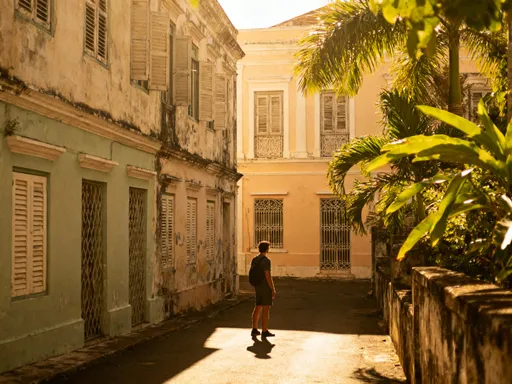
Nearby, small galleries and art collectives have taken root, offering a platform for emerging Jamaican artists. One such space, a converted colonial-era building with peeling paint and wooden shutters, hosts rotating exhibits that blend traditional Rastafarian symbolism with contemporary themes like climate change and migration. Another pop-up gallery in a former tailor shop features abstract paintings made from recycled materials — bottle caps, fabric scraps, and driftwood assembled into striking compositions. These spaces are not curated for tourist consumption; they reflect genuine artistic exploration and social commentary. Visitors are welcomed not as passive observers but as participants in a living dialogue. A local guide explained that many artists see their work as a continuation of Jamaica’s storytelling tradition — one that has long relied on oral histories, music, and visual symbols to pass down knowledge and resistance.
Street Art with a Story: Murals That Speak Volumes
Montego Bay’s street art movement has grown rapidly over the past decade, turning once-ordinary walls into powerful storytellers. Unlike decorative graffiti seen in other cities, these murals are deeply intentional, often created in collaboration with community leaders and historians. In the Rose Town neighborhood, a massive mural covers the side of a community center, depicting Marcus Garvey, Bob Marley, and other icons of Black empowerment against a backdrop of the African continent and the Jamaican flag. The colors are bold — red, gold, green, and black — and the faces are rendered with such detail that they seem to gaze directly at the viewer, demanding recognition and respect.
Other murals focus on everyday life and local pride. One in the Catherine Hall area shows a fisherman mending his net at sunrise, the ocean glowing behind him. Another in the Flankers district portrays a group of schoolchildren laughing as they walk to class, their uniforms crisp, their books held high like trophies. These images do more than beautify the city; they affirm dignity, resilience, and hope. Many of the artists are supported by nonprofit initiatives that provide paint, scaffolding, and training, ensuring that the movement remains accessible and community-driven. Walking through these neighborhoods, I noticed how residents paused to admire the art, pointing them out to children or taking photos with friends. The murals have become landmarks, not just of place, but of shared identity. They remind both locals and visitors that art is not a luxury — it is a necessity, a way of reclaiming space and telling one’s own story.
Craftsmanship in Motion: Markets and Artisan Experiences
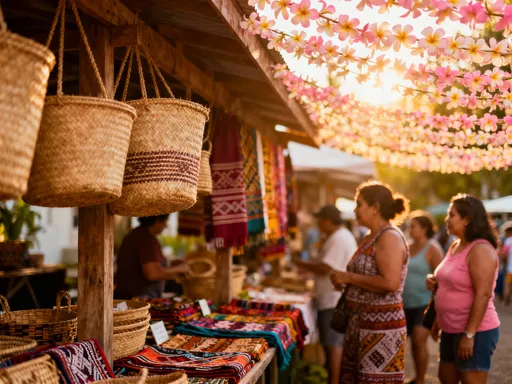
No exploration of Montego Bay’s art scene is complete without a visit to its bustling craft markets. The most famous, the Hip Strip, stretches along the waterfront and offers a mix of souvenir shops and open-air stalls. While some vendors sell mass-produced trinkets, others display authentic handmade goods that reflect generations of skill and tradition. One woodcarver, Mr. Everton, has worked in the same spot for over thirty years, shaping mahogany and guango wood into detailed sculptures of Anansi the Spider, Nyabinghi drummers, and mermaids from Jamaican folklore. His hands, rough and stained with pigment, move with practiced precision, revealing a lifetime of dedication.
Textile artisans also thrive in these markets. Women weave vibrant fabrics using techniques passed down from their grandmothers, incorporating symbols like the Adinkra motifs from West Africa or the colors of the Pan-African flag. I watched as a young woman named Tanya demonstrated how she dyes cotton with natural pigments from beetroot, turmeric, and indigo, then prints patterns using hand-carved blocks. Her scarves, each one unique, sold quickly to travelers seeking meaningful keepsakes. Pottery is another enduring craft. In a small stall behind the main market, an elderly couple shaped clay into bowls and vases, their fingers moving in silent harmony. They explained that their designs were inspired by Taino pottery, the indigenous people of Jamaica, and that each piece was fired in a traditional outdoor kiln.
What makes these artisan experiences so powerful is the personal connection. When you buy a hand-carved mask or a hand-dyed scarf, you’re not just purchasing an object — you’re supporting a family, preserving a tradition, and taking home a piece of someone’s story. Many artisans welcome questions and are eager to share the meaning behind their work. This direct exchange fosters a sense of respect and understanding that cannot be replicated in a gift shop. For travelers, especially women who value authenticity and connection, these interactions often become the most memorable part of the trip.
Rhythm and Canvas: How Music and Visual Art Intersect
In Jamaica, music and visual art are not separate disciplines — they are intertwined expressions of the same cultural spirit. This synergy is especially evident in Montego Bay, where live music events often double as art exhibitions. On Friday nights, a community space known as Art Yard hosts ‘Paint & Sound’ nights, where local artists set up easels in the courtyard and paint live as DJs spin reggae, ska, and dancehall. The energy is electric. Painters work quickly, their brushes moving in time with the beat, while spectators sip coconut water and sway to the rhythm. Some pieces are abstract explosions of color, others are detailed portraits of musicians mid-performance.
One evening, I watched a young artist named Lila complete a large canvas depicting a sound system in full operation — speakers stacked high, a DJ with headphones on, and a crowd with arms raised in celebration. She told me the painting was her tribute to the role of music in social movements, from the anti-colonial struggles of the 1960s to modern protests for justice. Her use of red and gold swirls evoked both fire and sunlight, symbolizing both struggle and hope. Nearby, a dancer improvised a routine inspired by the painting, creating a real-time dialogue between visual and performing arts.
Artist collectives have begun organizing larger events that blend painting, music, poetry, and dance into immersive experiences. One such collective, called Roots & Hues, hosts monthly ‘Culture Journeys’ that begin with a guided walk through the murals of downtown Montego Bay, continue with a live painting session, and culminate in a communal meal prepared by local chefs. These events emphasize collaboration over competition, community over individual fame. For visitors, they offer a rare opportunity to engage with Jamaican culture not as spectators, but as active participants. The connection between rhythm and canvas is more than aesthetic — it is spiritual, rooted in a worldview where creativity is a form of healing, resistance, and joy.
Hidden Studios and Emerging Talent
Beyond the public spaces and markets, Montego Bay is home to a network of hidden artist studios tucked into quiet neighborhoods and converted garages. These spaces are often unmarked, known only through word of mouth or social media. I was fortunate to be guided by a local art teacher who introduced me to several of these creatives. One studio, located in a modest home in Rosemount, belonged to a sculptor named Davion, who creates life-sized figures from recycled metal. His current project — a family standing hand in hand, made entirely from old car parts and tin — was both haunting and hopeful, a commentary on migration and reunion.
Another studio, in the outskirts of town, belonged to a painter named Nia, who specializes in large-scale portraits of Jamaican women. Her subjects are not celebrities, but everyday women — market vendors, teachers, grandmothers — rendered in rich, glowing colors that celebrate their strength and grace. She works with natural light from a skylight, and her studio walls are covered in sketches and color swatches. She explained that her goal is to challenge the lack of representation in mainstream art and to honor the women who hold communities together. Social media has been crucial for artists like Nia, allowing them to share their work globally while still living and creating in their hometowns.
Tourism, when done responsibly, has also played a role in supporting these emerging talents. Some hotels now partner with local artists to display their work in lobbies and guest rooms, providing both exposure and income. Others offer studio tours as part of cultural excursions, ensuring that visitors meet the artists face to face. These initiatives help ensure that the benefits of tourism reach beyond the resort economy and into the heart of the community. For travelers, especially women who value meaningful experiences, visiting these studios offers a profound sense of connection — not just to art, but to the people who create it.
Traveler’s Guide: Engaging with Culture Responsibly
For those eager to explore Montego Bay’s art scene, a few thoughtful choices can make all the difference. Begin by attending cultural nights at local community centers or galleries, where performances and exhibitions are often free or low-cost. These events are not staged for tourists — they are genuine expressions of local life, and your presence as a respectful guest is appreciated. When purchasing art, buy directly from the artist whenever possible. This ensures fair compensation and allows for meaningful conversation about the work’s inspiration and meaning.
Take time to learn a few basic phrases in Jamaican Patois, such as ‘How yuh deh?’ (How are you?) or ‘Mi likkle so, but mi fyah’ (I’m small, but I’m strong) — a popular saying that reflects national pride. While English is widely spoken, showing interest in the local language demonstrates respect. Avoid treating people or their art as photo opportunities without engagement. Ask permission before taking pictures, and if someone shares their story, listen with genuine curiosity.
Support community-based tourism initiatives that prioritize local ownership and sustainability. Choose guided walks led by residents rather than generic tour operators. Visit cooperatives and artisan collectives that reinvest profits into education and infrastructure. By making conscious choices, travelers help ensure that cultural exchange remains reciprocal and empowering. Most importantly, approach the experience with an open heart. Let the music move you, let the colors inspire you, and let the stories deepen your understanding. Art in Montego Bay is not a backdrop — it is a conversation, and every visitor has a role to play.
Montego Bay’s artistic pulse reveals a side of Jamaica often overlooked by mainstream tourism. By stepping into its galleries, streets, and studios, travelers don’t just see the culture — they feel it. This is more than a vacation; it’s a dialogue with a living, breathing creative spirit. From the murals that honor the past to the young painters shaping the future, the city invites us to look beyond the surface and connect with something real. For women who seek depth, authenticity, and beauty in their travels, Montego Bay offers a journey that nourishes the soul. It reminds us that art is not separate from life — it is life, expressed in color, rhythm, and courage. And in a world that often feels disconnected, that kind of connection is priceless.