You Won’t Believe What Cornwall’s Wild Coastlines Reveal
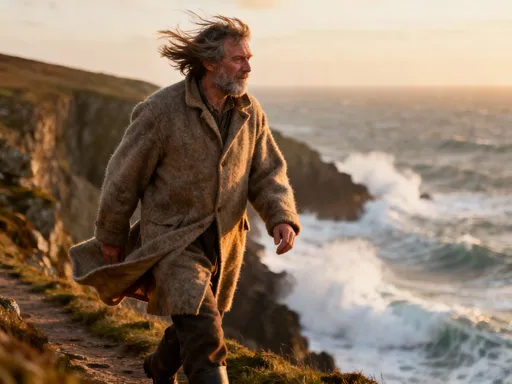
Cornwall isn’t just beaches and pasties—its raw landscapes whisper centuries of tradition. I’ve walked its cliffs, felt the Atlantic wind carry stories of old Celtic ways, and tasted the salt of heritage in every gust. The land here doesn’t just inspire awe—it shapes culture. From fishing villages rooted in seafaring lore to ancient fields still farmed by hand, nature and tradition are deeply intertwined. This is where the soul of England’s southwest comes alive. Every cove, every weathered stone wall, every narrow lane winding through hedgerows tells a quiet story of resilience, identity, and belonging. To visit Cornwall is not merely to see a place, but to feel the pulse of a living history shaped by wind, water, and time.
The Rugged Beauty of Cornwall’s Natural Terrain
Cornwall’s coastline stretches over 600 miles, a jagged ribbon of cliffs, coves, and tidal inlets that define the western edge of mainland Britain. The terrain here is not tamed. It rises and falls with the ancient rhythms of the earth, shaped by millions of years of oceanic force and geological upheaval. From the windswept headlands of Land’s End to the serpentine curves of the Lizard Peninsula—the southernmost point of the UK—the landscape reveals a raw, untamed beauty. The light here is unlike anywhere else: soft and silvery in the morning, golden at dusk, and often diffused through a maritime mist that clings to the cliffs like memory. This ever-changing atmosphere lends Cornwall a dreamlike quality, where sea and sky blur into one, and the horizon feels both distant and intimate.
The region’s geology is a story written in stone. Ancient granite formations, some over 300 million years old, form the backbone of Bodmin Moor and rise dramatically along the coast. These hard, enduring rocks resist erosion, creating steep cliffs that plunge into the churning Atlantic. Between them, softer shales and slates have been carved by time and tide into hidden coves and sheltered bays—places like Kynance Cove, where turquoise waters lap against black volcanic rock and white sand. The tides play a powerful role here, revealing tidal pools at low water and cutting off access to islands like St Michael’s Mount, a tidal causeway that links the rocky islet to Marazion at low tide. This dynamic relationship between land and sea shapes not only the physical environment but also the mindset of those who live here.
For locals, the land is not a passive backdrop but an active participant in daily life. Farmers navigate steep, rocky fields bounded by centuries-old dry stone walls. Fishermen read the weather in the color of the sky and the direction of the wind. Walkers tread carefully along the South West Coast Path, a 630-mile trail that traces nearly the entire Cornish shoreline. Every element of the terrain demands respect. The cliffs are unstable in places; sudden fog can disorient even experienced hikers. Yet it is precisely this unpredictability that fosters a deep connection between people and place. To live in Cornwall is to understand that nature is not something to be controlled, but something to be lived with—a force that shapes identity as much as it shapes the coastline.
Fishing Villages Where Sea and Culture Meet
Scattered along Cornwall’s coast are fishing villages that seem suspended in time. Places like Mousehole, Mevagissey, and Polperro are not museum pieces, but living communities where the rhythms of the sea still govern daily life. These harbors, often tucked into narrow inlets, were built for function, not tourism. Their stone quays, weathered by salt and storms, bear the marks of generations of fishermen who launched their boats at dawn and returned at dusk with crab pots, lobster nets, and lines heavy with mackerel and pilchards. Even today, many families continue this tradition, passing down knowledge through oral history, shared labor, and an unspoken understanding of the sea’s moods.
In Mevagissey, the harbor is lined with brightly painted net shops—small wooden buildings where fishing gear was once stored and repaired. Though some now house cafes or gift shops, their presence is a testament to a working past. Locals still gather at dawn to check the catch, and the scent of salt, seaweed, and diesel lingers in the air. In Polperro, a village so narrow that cars cannot pass in some lanes, fishing remains a central part of the economy. The annual Fish Festival celebrates this heritage with boat parades, seafood stalls, and traditional Cornish music echoing through the cobbled streets. These events are not staged for tourists; they are expressions of pride, rooted in centuries of maritime survival.
The resilience of these communities is quiet but profound. Fishing is no longer the dominant industry it once was, yet the culture endures. Families speak of ancestors who braved storms in small boats, of women who mended nets by candlelight, of children who learned to swim before they could read. Dialects, though fading, still carry traces of the Cornish language, and local surnames often reflect seafaring roots—Pengelly, Tremayne, Pascoe. The tides continue to dictate schedules. A fisherman will not set out if the wind is from the west; a festival will be postponed if the sea is too rough. This deep attunement to natural cycles fosters a sense of continuity, a feeling that life here is part of a larger, enduring pattern.
Ancient Farming Practices on the Edge of the Earth
Away from the coast, Cornwall’s interior is a patchwork of small farms, each carved into the hills and valleys with care and necessity. These holdings are often tiny by modern standards, bounded by stone walls that snake across the landscape like veins. The soil is thin, the climate damp, and the terrain steep—conditions that make large-scale agriculture impractical. Yet, rather than seeing this as a limitation, many Cornish farmers view it as a call to stewardship. Traditional methods, passed down through generations, remain in use: crop rotation, mixed farming, and the raising of heritage livestock breeds like the Cornish Rex sheep and the red Ruby Devon cattle.
Dry stone walling is one of the most visible symbols of this agricultural heritage. Built without mortar, these walls can last for centuries if maintained. They serve multiple purposes: marking boundaries, sheltering livestock from wind, and preventing soil erosion on sloped land. The skill of walling is still taught in local workshops, and community groups often come together to repair damaged sections. It is slow, physical work—kneeling on damp earth, selecting stones by hand, fitting them together with precision. But it is also deeply meaningful. Each wall is a testament to patience, resilience, and a belief in permanence, even in a landscape shaped by change.
Organic and low-input farming is increasingly common, not as a trend, but as a return to older ways. Chemical fertilizers and monocultures are rare; instead, farmers rely on natural compost, crop diversity, and rotational grazing. Some grow heritage varieties of vegetables—like the Cornish Gilliflower potato or the St Clement’s cabbage—crops that thrive in the region’s cool, moist climate. Farmers’ markets in towns like Truro and Penzance showcase these products, connecting consumers directly with the land. This model of agriculture is not about efficiency, but about sustainability and identity. It reflects a worldview in which people are not separate from nature, but part of its cycles—planting, tending, harvesting, resting.
Cornwall’s Celtic Roots and Living Traditions
The people of Cornwall are descendants of the ancient Britons, a Celtic culture that once spanned much of southern Britain. Though English is now the dominant language, the Cornish identity remains distinct, shaped by a shared history, landscape, and sense of place. In recent decades, there has been a quiet but powerful revival of Cornish culture—most notably, the Cornish language, or Kernewek. Once declared extinct, it is now taught in schools, used in signage, and spoken at community events. The language itself is a bridge to the past, filled with words that describe the natural world in precise, poetic ways: *mor* for sea, *bruth* for mist, *tredh* for footpath.
Traditional music and dance are also experiencing a resurgence. At festivals like Lowender Peran in Perranporth, visitors can hear the haunting tones of the Cornish bagpipes, the lilting rhythms of fiddles, and the call-and-response of communal singing. These gatherings are not performances, but participations—invitations to join in, to move, to remember. The songs often tell stories of shipwrecks, mining disasters, and love lost at sea, but also of survival, hope, and homecoming. They are expressions of collective memory, sung not for applause, but for connection.
The landscape itself is dotted with reminders of this ancient heritage. On Bodmin Moor, standing stones and burial mounds rise from the heather, their purposes long forgotten but their presence still felt. Sacred wells, once sites of pilgrimage, are marked by simple crosses or stone enclosures. Place names—like Tintagel, Zennor, and St Just—carry echoes of saints, legends, and mythological figures. For many locals, these sites are not relics, but living parts of the cultural fabric. Walkers pause at stone circles not to take photos, but to reflect. Families name their children after Cornish saints. Artists draw inspiration from old tales of mermaids, giants, and enchanted forests. This is not nostalgia, but continuity—a belief that the past is not behind us, but beneath us, shaping who we are.
Art, Craft, and the Landscape’s Influence
Cornwall has long been a magnet for artists, drawn by its luminous light and dramatic scenery. The town of St Ives, in particular, became a hub for modern British art in the 20th century, attracting figures like Barbara Hepworth and Ben Nicholson. Today, its galleries and studios continue to thrive, not as commercial enterprises, but as spaces of inquiry and expression. The Tate St Ives, perched on a cliff above the sea, showcases works that respond directly to the Cornish environment—sculptures that mimic the curve of a wave, paintings that capture the gray-green of storm-lit skies.
But art in Cornwall is not confined to galleries. It spills into workshops, cottages, and village halls. Potters in Newlyn shape clay into vessels that echo the forms of shells and pebbles. Textile artists in Penzance use natural dyes from seaweed, heather, and lichen to create fabrics in soft, earthy tones. Jewelers set local serpentine and tin into necklaces and rings, transforming geological fragments into wearable stories. These crafts are not imitations of nature, but interpretations—ways of translating the landscape into form, color, and texture.
What sets Cornish art apart is its humility. There is little desire to dominate or monumentalize. Instead, there is a focus on observation, restraint, and connection. An artist might spend weeks walking the same stretch of coast, noting how the light changes with the seasons, how the tide reveals new patterns in the rock. A potter might fire a kiln using driftwood collected from the shore, linking the final piece to the energy of the sea. This deep engagement with place fosters a kind of art that feels grounded, authentic, and necessary. It is not made for markets, but for meaning.
Sustainable Tourism and Protecting Cultural Integrity
In recent years, Cornwall has seen a surge in visitors—driven by its natural beauty, cultural richness, and reputation as a peaceful retreat. While tourism brings economic benefits, it also poses challenges. Overcrowding, rising property prices, and seasonal strain on infrastructure threaten the very qualities that make Cornwall special. In response, local communities, conservation groups, and government agencies have launched initiatives to promote sustainable tourism—travel that respects both the environment and the people who call Cornwall home.
The South West Coast Path is a prime example of this effort. Maintained by the National Trust and local volunteers, the trail is carefully managed to prevent erosion and protect wildlife habitats. Signage encourages walkers to stay on marked routes, avoid disturbing nesting birds, and carry out all litter. In sensitive areas, access may be restricted during breeding seasons. These measures are not about exclusion, but about preservation—ensuring that future generations can experience the coast as it is today.
Accommodation options are also evolving. Eco-friendly cottages, powered by solar panels and heated with biomass boilers, are increasingly available. Some farms offer agritourism stays, where guests can help with chores, learn about traditional practices, and eat meals made from on-site produce. Community-led tours—led by fishermen, farmers, or historians—provide authentic insights while keeping revenue local. These experiences emphasize connection over consumption, inviting visitors to slow down, listen, and participate.
Travelers can contribute by making mindful choices: supporting independent businesses, respecting quiet villages, and learning a few words of Cornish as a gesture of appreciation. They can visit in the shoulder seasons—spring and autumn—when the crowds are thinner and the light is soft. Most importantly, they can approach Cornwall not as a destination to be conquered, but as a culture to be honored. This shift in mindset—from tourist to guest—is essential to preserving the region’s soul.
Why Cornwall’s Culture Can’t Be Separated from Its Nature
To understand Cornwall is to recognize that its culture and landscape are not two separate things, but one intertwined reality. The wind that shapes the trees also shapes the character of its people—resilient, independent, attuned to change. The sea that feeds the villages also fills their stories, their songs, their dreams. The stone that builds their walls also anchors their sense of belonging. Every tradition, every craft, every dialect word is rooted in the physical world, born from the need to survive and thrive in a place that gives generously, but on its own terms.
Walking through a Cornish village at dawn, you might see a fisherman mending nets, a farmer opening a stone gate, a baker pulling pasties from the oven. These are not performances for visitors; they are the quiet rhythms of a life shaped by centuries of adaptation. To witness them is to glimpse a different way of being—one that values continuity over convenience, community over consumption, and reverence over exploitation.
Cornwall does not offer escape. It offers belonging. It invites you not to take pictures, but to pay attention. Not to check off sights, but to feel the salt on your skin, the crunch of gravel underfoot, the warmth of a pub fire after a long walk. It asks you to listen—to the crash of waves, the creak of a boat, the lilt of a local voice. In doing so, you begin to understand that this land is not a backdrop for your journey. It is a living story, and you are, for a moment, part of it.
So come to Cornwall not to see, but to feel. Walk its paths with respect. Talk to its people with curiosity. Let the wind carry you not just across the cliffs, but into the heart of a culture shaped by wave, weather, and time. Here, on the edge of the earth, the past is not gone. It is alive—in the stones, in the soil, in the sea. And it is waiting to be heard.